Australia’s superannuation industry today reaffirmed its commitment to property and infrastructure when it told a Parliamentary inquiry it had a further A$28bn (€16.7bn) available for the two asset classes as the economy emerges from the COVID-19 lockdown.
Industry Super Australia (ISA), which represents A$771bn in superannuation money, appeared at House Economic Committee hearings to answer questions on funds’ liquidity, and, by inference, their high allocation to illiquid assets.
Since the Australian government sanctioned the early release of retirement savings to help members cope with economic hardship, questions have been raised as to whether heavy weightings to asset classes like property and infrastructure would limit their ability to provide liquidity.
Collectively, industry super funds own A$80bn in Australian infrastructure, property, and other illiquid assets.
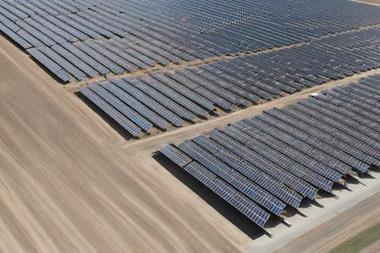
The A$28bn earmarked for infrastructure and property could fund solar farms at Darwin airport, terminal expansions at other airports, rail upgrades, new shopping centres, and commercial and residential developments, according to ISA, which was represented by CEO Bernie Dean and his deputy, Matt Linden, at the Parliamentary hearing on Thursday.
Earlier, Greg Combet, ISA chair, said in a statement: β€œWe’ve got significant funds available, with plans to provide capital to solid Australian businesses and bring forward large investments in major projects and essential infrastructure that will create new jobs and sustain many more.β€
Combet said industry funds had been helping members through the tough times. β€œWe stand ready to help get them safely back to work – and the economy growing again,β€ he said.
Three of the largest industry funds – AustralianSuper, Hostplus and REST – have together made available up to A$3bn in early super fund releases to their members.
More than 1.2 million Australians have sought to withdraw nearly A$10bn from their retirement savings to help them through the COVID-19 crisis.
ISA said super funds had β€œpoured hundreds of millions into the balance sheets of good Australian businessβ€ to help these companies rebuild and expand operations, and participated in capital raisings for Australian companies, including National Australia Bank and Ramsay Healthcare.
β€œThere could be billions more to come,β€ ISA said. β€œAt the end of the global financial crisis, superannuation funds provided a significant portion of the A$120bn in capital raised by local businesses.β€
To read the digital edition of the latest ΒιΆΉΣ³» Real Assets magazine click .