

Rapid technological advances are set to transform the logistics sector in the next few decades as warehouse operators devise new production systems to meet growing customer demand.
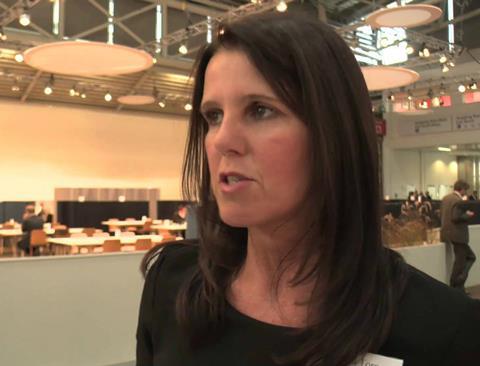
Addressing delegates at the International Investors Lounge at Expo Real, Alexandra Tornow, JLL's associate director for logistics and industrial research, said future-proofing assets was a major challenge for developers and investors.
The main opportunities are in automation, with smart devices, robotics, autonomous vehicles and 3D printing all playing a role, Tornow said. City logistics will be another growth area as suppliers look to create smaller, more flexible warehouses closer to the delivery point.
Over time warehouses will employ more robots and fewer people, but this will not be an overnight process as technologies first have to become reliable. Progress will also depend on increasing power supplies and creating secure 24-hour wifi access. In the immediate term Tornow said the sector will continue to need out-of-town warehouses with large car park areas for employees.
'Technology will speed up production processes and operational processes and make them easier,' she said. 'It will also improve the insight and customer demand and this will to a certain extent prevent the need to store large inventories. But it will also require a new approach towards infrastructure requirements, security and skillsets.'
The main driver of change is the need to be close to the customer and improve final-mile delivery, Tornow said. She predicted rising demand for manufacturing space across Europe, as well as new industrial zones in cities made up of smaller inner-city depots, possibly converted from other uses such as offices or car parks. Research and development will also play an important role, with 3D printing being used to produce spare parts.
'We can expect further robust and even growing occupational demand over a number of years,' she said. 'But the dimensions, the design, the infrastructure network requirements and the location of warehouses will have to shift in order to support new operational processes and changing customer demand.'