

The fast-evolving retail sector in Central and Eastern Europe offers great opportunities because of the mismatch between what is available and what is needed, market experts agreed at the PropertyEU Drivers for Growth CEE Investment Briefing which was held in Warsaw recently. However, problems around planning need to be addressed, panellists said.
‘Growth here is higher and sustainably higher than anywhere else in Europe, and this is the underlying strength of the investment case in the region,’ said Brian Klinksiek, director of research and strategy at Heitman. ‘The opportunities are even stronger here than in Western Europe, but not many owners and developers are taking advantage of that.’
The reason, he explained, is that the retail sector is underserved: many CEE cities lack high streets and city centres where it is pleasant to hang out, due to the destruction of the second world war followed by decades of communist architecture, ‘so the only places to socialise are shopping centres.’
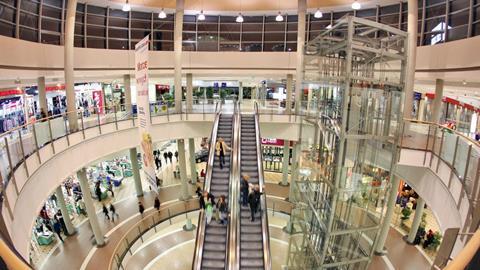
There is no lack of them – in fact, per capita shopping centre space is higher in CEE than in Western Europe – because there is little alternative. What is needed now is careful planning to turn them into ‘urban villages’ and destinations that people want to go to. ‘This is the big opportunity that has not been pursued in the region,’ Klinksiek said.
‘Change presents opportunities, not just challenges, and the retail industry is adapting well,’ said Hadley Dean, the newly-appointed CEO of Echo Prime Properties. ‘We plan to have a presence in all the major cities in Poland. We want to build the first national champion.’
Retail is fastest-growing sector
According to a recent CBRE survey, retail is one of the fastest-growing sector of the Polish economy, and Poland is ranked as 19th most attractive country globally for retail brands.
In this fast-moving scenario, trends that have long been observed elsewhere in the US and Europe are now coming to CEE, such as e-commerce and consumers’ demand for a better retail experience. ‘First-generation shopping centres in secondary locations are being killed off, as well as the high street,’ said Dean. ‘E-commerce offers choice to the consumer and that is why it is exploding in Poland. But we are also very interested in the potential of retail parks and outlet centres.’
Shopping centres are not dying, but they are evolving to adapt to the growth of e-commerce and changing consumer needs, said Brian Jenkins, President and CEO of Multi Corporation’s King’s Street Retail Properties. But he agreed with Dean on the great opportunities ahead for a different kind of shopping experience: ‘Even if traditional shopping centres are reaching saturation point, the potential for outlet centres and open-air retail parks is off the charts. There is a lot of blue sky for that.’
Increasingly shopping centres anchors will downsize, especially fashion retailers, effectively becoming ‘little more than showrooms for internet shopping, especially for fashion retailers,’ said Jenkins. ‘But there are upsides: food and beverage are doubling their space to create a better experience which is necessary to compete with online shopping.’
In the end ‘you cannot get a haircut or eat a hamburger online, so the truth is that bricks and mortar dovetails with the internet: they need each other and strengthen each other.’
And the consumer benefits from better choice both online and in real life.