

The top global grocery and health & beauty retailers are once again seeking global growth, according to a new report by Planet Retail and the Consumer Goods Forum, published this month.
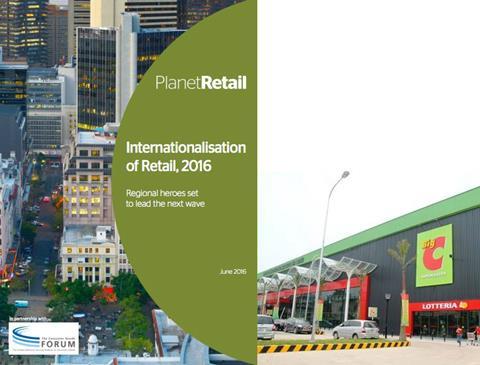
After a relatively modest increase in the international presence of leading players between 2012-2014, the number of markets in which they operated jumped noticeably in 2015, according to the report.
But it’s not all rosy for the big retail players, with some retailers scaling back their international presence. UK-based Tesco is a case in point and has been cutting back its international portfolio, most recently in South Korea and Turkey. These sales allow Tesco to concentrate on getting its core UK operation right.
French retailer Casino has also scaled back in Asia, removing itself from Thailand and Vietnam to focus on South America. According to Robert Gregory, global research director at Planet Retail: ‘Retailers are recognising that they cannot be a success all over the world and are some are focusing on core regions.’
Opportunities for regional players
While a strong US dollar actually reduced the share of sales derived from non-domestic operations in 2015, the Top 100 added a net 27 new markets to their international operations, compared to just 17 in the preceding two years combined.
Meanwhile, the average number of markets operated by a Top 10 retailer exceeded 16 for the first time. These retailers include Walmart, Carrefour and 7-Eleven who are all targeting Africa and the Middle East, two regions relatively underdeveloped, with young populations.
Where some are scaling back their international presence to retrench in home markets, there are opportunities for regional players to snap up empty retail space in their own bid to launch into enticing new, global markets.
Three key trends
The report highlights three key trends: Africa and the Middle East have emerged as key regions for retail internationalisation. New routes to international markets through the internet and online marketplaces are allowing big and small retailers, including Costco, Sainsbury’s and Australia’s Woolworths to trade internationally.
This includes single market-only retailers who are testing the appeal of their private labels overseas.
Finally, the retrenchment of some big retailers out of new markets, such as Tesco in South Korea and Turkey, have left space for new, ambitious regional retailers to grow in their home markets before expanding themselves into new, global markets.
According to Gregory, these retailers are likely to become increasingly important future drivers for internationalisation.