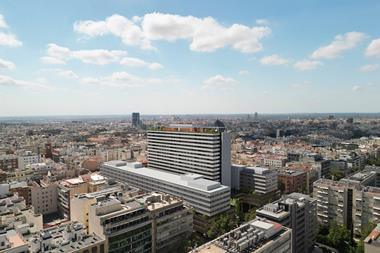


CEE retail specialist Plaza Centers has announced the sale of the Dream Island project in the Hungarian capital Budapest due to the lack of development finance.
CEE retail specialist Plaza Centers has announced the sale of the Dream Island project in the Hungarian capital Budapest due to the lack of development finance.
The stalled project was sold by a consortium of shareholders to the Hungarian State for €15 mln.
Plaza held a 43.5% stake in Dream Island, which was designed to be a prestigious mixed-use scheme on Óbuda Island in central Budapest. The project has a land area of 320,000 m2, which is intended to be developed as a major resort including hotels, recreation facilities, a casino and a business and leisure complex comprising 350,000 m2 gross built area.
The selling consortium comprises an 87% holding interest of the 50:50 joint venture partnership between Plaza and MKB Bank, a Hungarian subsidiary of Germany's Bayerische Landesbank; a company controlled by the managing director of the consortium (10% interest) and a further 3% owned by other minority shareholders.
The proceeds of the transaction will be used by the consortium to repay a proportion of the securitised related bank debt held against the asset. As the result of a previous writedown, the asset is currently held on Plaza's balance sheet at the value of the loan, which is non-recourse, therefore no accounting loss is expected to be incurred.
Plaza president and CEO Ran Shtarkman, said: 'The Dream Island project, which remains in the planning stages, no longer offers us a viable medium-term opportunity to produce strong levels of income and deliver value enhancement for our shareholders, especially in the context of an ongoing lack of readily available development finance for such large scale projects. However we believe in the long term underlying fundamentals of the Hungarian economy and will continue to actively manage our assets in the country whilst seeking additional business opportunities.
'This transaction is also in line with our strategy to deleverage and to dispose of non-core assets and to focus on the core yielding assets across our portfolio. As such, we will continue to pursue a conservative approach to our business, de-risking our development programme whilst effectively managing both our finances and investment assets to maximise value.'