
PropertyEU has learned the identities of the two Korean institutional investors who joined French asset manager Amundi in last week's €350 mln acquisition of De Rotterdam - the largest single asset transaction in Dutch real estate history.
Amundi led the consortium comprising unnamed Korean institutional investors, but PropertyEU can reveal that the Korean investors in the deal were the Korean Federation of Community Credit Cooperatives (KFCCC) and Meritz Securities.
KFCCC is a not-for-profit banking entity to which Korea's credit co-operatives or credit unions belong. According to its website, KFCCC administered KRW 37 bn (€28 bn) of assets at end-2012.
Meritz Securities, which had KRW 3.2 bn (€2.4 bn) of assets at end-2014 is a subsidiary of Seoul-based Meritz Fire & Marine Insurance company.
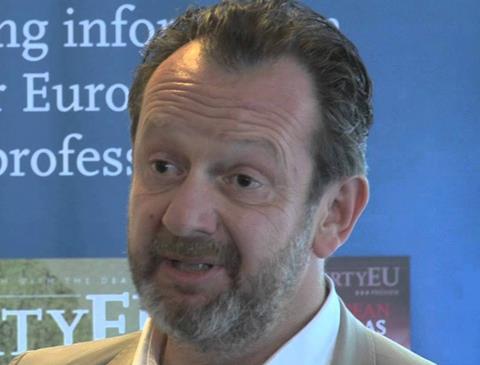
Both KFCCC and Meritz made 'significant' investments in the consortium that acquired the 160,000 m2 De Rotterdam mixed-use tower in the Dutch port city of Rotterdam, according to Didier Unglik, president of L'Etoile Properties which originated the transaction on the buy side and put the consortium together. The Korean side of the investment, Unglik said, was handled by Korea's Simone Investment Management.
This is their first direct deal in the Netherlands.
TOUGH DEAL
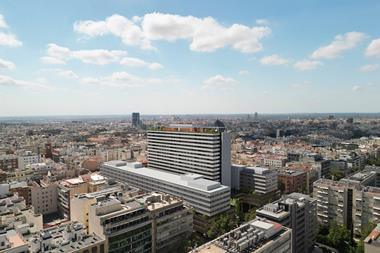
De Rotterdam is a 44-storey tower designed by OMA/Rem Koolhaas and is located on Wilhelmina Pier overlooking the Nieuwe Maas, a branch of the Rhine River, in Rotterdam. The sale relates to 75,000 m2 of office space, a 278-room NHow hotel, a 2,000 m2 congress and events centre, 3,000 m2 of commercial units and a five-floor parking garage with 670 parking places which is leased to Q-Park. The 240-unit residential component of De Rotterdam is owned by Amvest.
The vendor is the real estate arm of Dutch bank Rabo and Savills advised on the marketing and sales process.
L'Etoile sourced and structured the deal, according to Unglik. 'We have done a lot of work with Amundi and had been trying to convince the company to invest in the Netherlands for some time.'
The seed for the transaction was sown while Amundi was in Rotterdam viewing the office property Las Palmas, which was part of the pan-European Aqua portfolio Amundi acquired last year from Union Investment, Unglik recalled.
L'Etoile had meanwhile been in contact with Korean investors for two years, and the French company put together a 'brand new venture' between KFCC, Meritz and Amundi. 'It was a tough deal due to cultural differences, Korean institutions like to take their time to consider every aspect when embarking on a major investment, and there was the added consideration that Rotterdam is very far away from Korea,' Unglik said. 'But we were able to present Amundi as the "big brother" that would see that the transaction was completed effectively.'
More transactions by Korean investors can be expected in the Netherlands or other western European markets, Unglik said. These investors are, however, risk-averse and they have slow internal processes which can mean that it is difficult for them to compete with more seasoned investors. 'But it is a learning process for them,' said Unglik. 'There is a clear trend for Korean institutions to invest overseas, in the US, the rest of Asia and in Europe. Germany is normally the first target in Europe but they are also looking at France, the Netherlands, Belgium and possibly Spain.'