

The German real estate market is still polarised in terms of financing opportunities, according to Derk Opitz, partner at law firm Ashurst.
The German real estate market is still polarised in terms of financing opportunities, according to Derk Opitz, partner at law firm Ashurst.
Residential property is particularly popular, but the picture for other asset classes is somewhat more varied, he said during PropertyEU's Debt Finance Investment Briefing in Frankfurt at end April.
Germany has seen a number of landmark residential deals in the past 12 to 18 months including the sale of the LBBW and GBW portfolios to consortia led by Patrizia and TAG’s acquisition of the TLG portfolio. All were big-ticket deals involving price tags rising up to €2.4 bn. Opitz: ‘We haven’t seen such big tickets in the office sector. There haven’t been so many deals either in light industrial and logistics.’
The competition for the landmark resi deals has been fierce, he added. ´Every bank wants to be part of the refinancing. The big names have all been there and we’ve seen a full choice of landesbanks, pension funds and insurers fronted by former CMBS banks. That has helped squeeze margins.’
The renewed focus on the German residential sector has fuelled price rises in Munich and Berlin, Daniel Mair, senior associate at Ernst & Young pointed out. ‘It’s easier to get a new development going in the leading cities in Germany, but there are still many places where investors can’t get debt financing.’
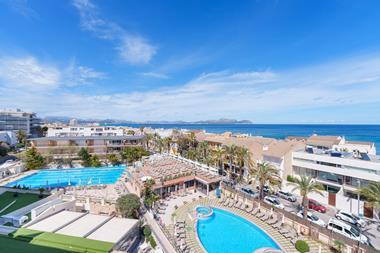
Hotels are another segment where it’s relatively easier to obtain financing, he added. ‘Hotels are seen as an attractive asset class at the moment. Logistics can also get financing if the assets are in the right location. It’s a varied picture.’
Financing is also available for retail assets, but only in prime locations, Opitz added. ‘There’s finance for single-asset trades but not portfolios. It becomes more difficult outside prime locations without a strong sponsor. For assets in B locations with smaller sponsors, it’s a lot more difficult.’ In the lower market segment of deals up to €20 mln, local banks are very competitive with aggressive rates, Opitz noted. ‘But they are beneath our radar. They have no need for an international law firm.’
As the refinancing wall continues to loom over the sector, Opitz believes extensions will be agreed in many cases. At the same time, he also sees a window of opportunity emerging for buyers over the next 24 to 30 months as the refinancing wall causes prices to fall. ‘It’s a deadlock scenario. Banks will be forced to keep the loans for 2-3 years more. It puts pressure on sellers, and that will lead to more opportunities.’
The same is true of the CMBS sector. Roughly €30 bn of CMBS loans are due to mature this year, he added: ‘Market participants are becoming more desperate now. We haven’t seen so many CMBS loans that have defaulted, but we are running out of time now.’
Financing and distessed portfolio sales will be among the themes of PropertyEU's taking place in Paris on the morning of 23 May. Click on the link for more information and to secure your place.