PFA, Denmark’s largest commercial pension provider, is looking to invest some €5bn over the next five years to meet its target of a 10% allocation to alternatives, according to a senior portfolio manager at the pension investor.
Speaking on a renewable energy panel at ΒιΆΉΣ³» Real Estate’s Real Assets & Infrastructure conference in London, Jacob Lise Lyngsgaard said the task was an β€œinteresting but also quite challengingβ€ mandate.
Lyngsgaard said PFA had historically been underallocated in alternatives, at around 2%, and that it was focusing β€œa lotβ€ on renewable energy and infrastructure investments as part of its aim to increase its exposure to alternatives.
He said PFA had taken different routes to alternatives – through funds, partnerships and direct investment – and that the approach it opted for would depend on risk/return profiles and β€œwhere in the world we are actingβ€.
Asked what PFA looked for in a partnership with a sector specialist, Lyngsgaard listed experience, alignment of interests and β€œskin in the gameβ€.
β€œWe prefer to work with partners who also invest in the project themselves,β€ he said, naming Dong Energy, WPD and Siemens as examples.
Michael Lewis, chief executive of E.On Climate & Renewables, identified the need for partners as a major trend, alongside that of a rapid reduction in returns.
He said the culture of an organisation was very important when forming partnerships, and that E.On looked for partners with the shared mindset of wanting to get a project built first and not one of immediately reaching for a legal solution to disputes.
β€œThe good news is that we’ve found plenty of partners like that,β€ he said.
He said there had been a move away from the traditional utility model whereby one develops, builds and then owns a project for a long time, and that β€œwe don’t carry these assets forever on our balance sheet any moreβ€.
Instead, his company works with partners at an earlier stage – pre-construction, for example, or as part of a sell-down after construction.
Wolfgang Bischoff, head of global equity, energy finance at Siemens Bank, said Siemens was typically a greenfield project finance equity investor, β€œcoming in relatively early and seeing the transaction through to closeβ€.
Jon Boles, director at Real Investments, said there were conducive conditions for growth in renewable energy in Europe, citing factors such as competitive generation costs, strong political will (also increasingly in the US) and supportive regulation away from fossil fuels and nuclear power.
Winds of change
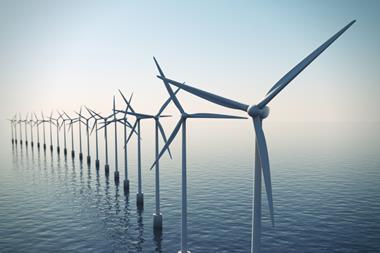
As moderator of the panel discussion, Boles raised the question of whether yields in the offshore wind market were adequately reflecting risks or if the reduction in yields over the past two years had gone β€œtoo farβ€.
Siemens’ Bischoff said returns from offshore wind had fallen, but that risks had also come down.
Even though offshore wind β€œis not a commodity or risk-freeβ€, the risks are much better understood, he said, adding that the industry had become more experienced and that β€œflakyβ€ players had disappeared.
E.On’s Lewis said there had been β€œa sea changeβ€ in the past two years in terms of the risk perception of offshore wind by investors, which had been caught up quite suddenly with de-risking developments from a technological/technical perspective.
He said time would tell whether this was overdone, adding that the market would price that risk correctly.
Lyngsgaard at PFA agreed that the industry had matured and been de-risked but warned that β€œa lot of the good sites have been takenβ€, which fuels a push further offshore into deeper waters.